ACTIVE PULSE ad
fitness · biofeedback wearables for athletes · Active · running 30d
Ad copy
Feel Like Yourself Again
My blood pressure was 148/97. My new doctor called my old doctor "negligent". My old doctor had been the only one who listened to me for…
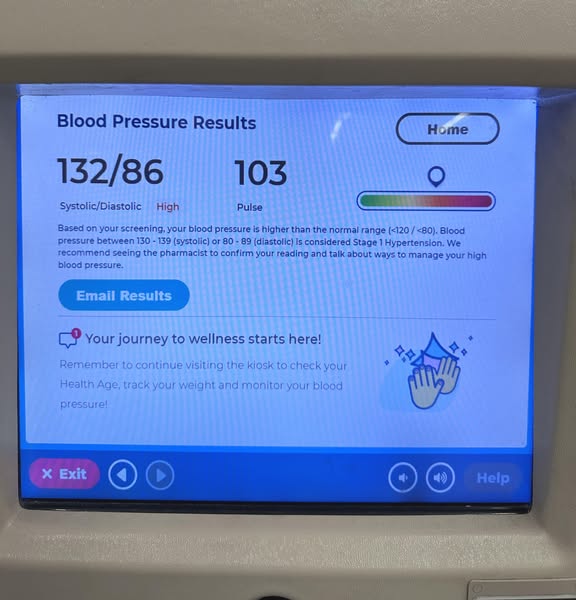
eleven years. Now I had a prescription I didn't want, a doctor I didn't trust, and a medical record that said "non-compliant" next to my name. My name is Laura, and I'm 56. I spent 30 years as a nurse at the hospital in my city. Three decades on cardiac floors and in clinics, handing patients their prescriptions, explaining the dosing, telling them to come back in twelve weeks for a recheck. So nobody had to explain to me what a rising number meant. For eleven years, Dr. Edward was my doctor. He knew my father's stroke history. Knew I'd lost him at 63. Knew I couldn't even hear the word "medication" without my hands going cold. He'd been watching my numbers creep. 135/88 in 2019. 140/90 in 2021. 144/93 by 2023. Every visit, same conversation. "Laura, we're keeping an eye on it. Diet, exercise, manage the stress. You're doing the right things. We have time." I believed him. I needed to believe him. Then Dr. Edward moved his practice to another state. His replacement was Dr. Pham. My first appointment was supposed to be a formality. Transfer records. Shake hands. Nothing more. I sat on the exam table in a paper gown. Same office. Same anatomy poster. Different doctor. Dr. Pham walked in. Late thirties. Wire-rimmed glasses. Didn't smile. "Mrs. Peterson." She opened my chart on her laptop. Scrolled. Stopped scrolling. Scrolled again. Then she turned the screen toward me. "Your blood pressure trend over five years. Steady climb. No intervention. No medication prescribed. Can you explain this?" "Dr. Edward was monitoring it. We were trying lifestyle changes." "Lifestyle changes." She said it like it tasted bad. "Your blood pressure is 149/97. You've been in Stage 2 hypertension for at least two years. Whoever told you lifestyle changes were sufficient at these numbers was being reckless with your life." The room tilted. "He wasn't reckless. He knew my history. My father died of a stroke at 63 and her blood pressure medication caused" He cut me off. "I've read your family history. That's precisely why you should have been on medication years ago. Not in spite of your father's stroke. Because of it." She pulled up a prescription form. "We're starting Lisinopril. 10 milligrams. Today." "I don't want Lisinopril." "Mrs. Peterson, if I let you walk out of this office unmedicated, I'm repeating the exact negligence your previous doctor committed. I won't do that." Negligence. The word hit my chest like a fist. Dr. Edward. The man who held my hand when my father died. Who called to check on me after his funeral. Who spent 45 minutes with me when I panicked about my first elevated reading. Negligent? "Your refusal will be documented as non-compliance against medical advice." The printer spit out the prescription. She placed it on the counter. I drove home with it on the passenger seat. Couldn't touch it. That night my husband David found me at the kitchen table at midnight. Laptop open. "What are you doing?" "Trying to figure out who's right." "About what?" "Dr. Edward said we had time. Dr. Pham says he nearly killed me. Same chart. Same numbers. One says patience. The other says malpractice." He sat down. Quiet for a long time. "What if they're both wrong?" I stared at him. "What if Dr. Edward was too slow and Dr. Pham's too fast? What if neither of them is giving you what you actually need?" I didn't sleep. At 3 AM I was on my laptop. "is 149/97 blood pressure dangerous without medication" "lisinopril side effects long term kidney" The articles confirmed what I feared. Stage 2 hypertension increases stroke risk. Organ damage accumulates. But Lisinopril? Dizziness. Chronic cough. Kidney problems. My father's face surfaced. He'd been on Amlodipine for nine years. The swelling in his ankles that never went down. The fatigue that turned a man who gardened every morning into someone who couldn't climb the porch steps. The afternoon he fell in the bathroom. Broke his hip. He had a stroke eight months later. At 63. On medication. The medication managed his blood pressure. Didn't prevent the stroke. Didn't save his life. I closed the laptop. The prescription sat on the counter in the kitchen. I could see it from where I was sitting. I didn't fill it. Dr. Pham's office called four days later. Then again the following week. "Mrs. Peterson, the doctor wants to confirm you've started the Lisinopril." "Tell her I'm exploring other options." "She strongly advises against delaying treatment." I hung up. That weekend I spent twelve hours researching. Beetroot supplements kept appearing. Dietary nitrates. Nitric oxide production. University studies showing measurable blood pressure reductions. I ordered a beetroot powder first. The one from Amazon. Took it every morning for 6 weeks. Mixed into my coffee. $39 a tub. Tasted like dirt. Stained everything pink. 148/96. One point lower. Found a website that suggested Fish Oil. Grabbed Amazon's top seller. Seven weeks. 147/95. Still Stage 2. Just fish burps for half a year and a fridge that smelled like a pier. Then tried Magnesium glycinate at $28 a bottle. Five weeks. Nothing changed. Three supplements. 17 weeks. Over $300. My appointment with Dr. Pham was in nine days. I pictured walking in with the same numbers. Watching her pull up my chart. Hearing the word "non-compliance" again. Seven days before the appointment, I was at Whole Foods doing my weekly shopping. Cart half full. Same loop I do every Saturday. Produce, then the aisles. I was reaching for something when I saw him a few feet down the aisle. Dr. Raymond Cole. I knew the face before I placed the name. He'd been a cardiologist in the same hospital back when I was on the cardiac floor. We'd worked the same patients for almost a decade. He was retired now, a little grayer, but the same calm posture that used to settle down the whole unit on a bad night. "Raymond?" I said. "Raymond Cole?" He turned. Took a second. Then his whole face opened up. "Laura! My God. It's been years." We stood there with our carts and talked the way you do when you bump into someone from another life. His kids. Retirement. Who was still at the clinic and who'd moved on. He told me he'd taken up gardening and his wife said he was worse at it than he thought. I told him I'd been off the floor a while now. It was easy. Familiar. The kind of conversation that reminds you who you used to be. And somewhere in the middle of it, standing there with the health supplements two feet to my left, the same ones that hadn't done a thing for me in four months, I just decided to ask him. Nurse to doctor. The way I would have on the floor. "Raymond, you're the heart guy. Let me ask you something. What's the best thing for blood pressure?" I expected him to say beetroot. Or fish oil. Or one of the things already sitting dead in my cabinet. He didn't. He looked at me for a second. Then he said something I have not stopped thinking about since. "It depends. It's really one question. Do you want to mask the symptom, or do you want to address what's actually causing it?" I felt something go still in my chest. "What do you mean, mask the symptom? Isn't lowering the number the whole point?" "Lowering the number is the point everyone chases," he said. "It's not the same as supporting what's actually driving it. Let me ask you something. Do you know what actually controls your blood pressure? Not the heart. The vessel wall." "The wall?" "The inside of every blood vessel you have is lined with a living inner wall. When it's healthy, it makes a molecule called nitric oxide. That's your body's own signal telling your vessels to relax and open. Healthy wall, the vessels open on their own, blood flows easy, pressure stays down. You never think about it. Same as breathing." I knew this. Some buried part of me from nursing school knew this. But I'd never once thought about my own. "So what goes wrong?" I asked. "Years," he said. "Years of inflammation, stress, blood sugar, processed food. All of it flows right across that wall and corrodes it. Like the inside of an old pipe. A corroded wall can't make nitric oxide anymore. So the vessels stay tight. The blood has to force its way through. That's your high number. And the harder it forces through, the more it shreds the wall. It feeds itself. It gets worse every single year." I stood there holding the handle of my cart and felt the floor drop. "That's why the supplements didn't work," I said slowly. "Isn't it." He nodded, gentle about it. "Beetroot adds nitric oxide from the outside. But your body already makes its own. The problem was never that you were short on it. The problem is the wall that's supposed to make it is too damaged to do its job. Adding more is like pouring water into a bucket with a hole in the bottom. Doesn't matter how much you pour." "Then what about the Magnesium and Fish Oil?" I asked. "Magnesium relaxes the muscle around the vessel. Doesn't touch the wall. Fish oil cleans the blood. Doesn't touch the wall. The pills force the vessel open while the wall keeps corroding underneath. Every one of them works around the wall. None of them fixes it." Four months. Three products. Every one of them aimed at everything except the one thing that mattered. "Okay," I said. "Then how do you fix a wall?" And for the first time he smiled. "Now you're asking the right question. You stop the thing that's corroding it. You neutralize the free radicals tearing it up so it can finally recover. And when it's working the way it's meant to, it starts making its own nitric oxide again. On its own. The way it did when you were 30. The vessels relax because the wall is telling them to, not because a drug forced them. The pressure comes down because your body is doing what it already knows how to do. You just have to fix the wall first." "And what does that?" "There's a superfruit," he said. "Grows in the Himalayas. Amla. Healers in the Himalayas used it for five thousand years and called it the nurse, because it was what they reached for when a body was breaking down from the inside. We didn't understand why until recently. It has compounds in it called emblicanins. When they tested the antioxidant strength of over a thousand foods, Amla ranked at the top. Not blueberries. Not turmeric. Not green tea. Amla. And it wasn't close." He nodded toward the beetroot tub by my elbow, like he was closing a door I didn't need to open again. "Those emblicanins go to work on the wall. They neutralize the free radicals that have been corroding it for years. The assault eases up, the wall starts functioning the way it's meant to, the nitric oxide comes back." He stopped for a moment. He looked like he was thinking. "There was a clinical study where standardized Amla extract went head to head with one of the most prescribed cardiovascular drugs in the world. The Amla performed comparably. Blood pressure down. Cholesterol down. Inflammation down. Without the cough. Without the swollen ankles. Without the exhaustion." I must have just stared at him, because he laughed. "One more thing, because I know how this goes. Most Amla on a shelf, like in this store, is junk. Cheap ground-up fruit powder. No standardization. No way to know what's actually in the bottle. The stuff in the studies was a standardized extract, verified for the exact amount of emblicanins, no heat processing that kills the active compounds, third-party tested so you know it's real. That's the difference between something that actually supports the wall and something that collects dust in your cabinet." I asked him the only question I had left. "How would I know it's even working?" "You measure it," he said. "Same arm, same time, every morning. Give it a few weeks. The wall doesn't heal in a day. But it heals. And the number will tell you the truth long before any doctor does." His wife waved at him from the end of the aisle. He squeezed my shoulder the way he used to on a hard night on the floor. "You were a good nurse, Laura. You always wanted to fix the cause, not chase the chart. Don't stop now." I stood there with my half-full cart for a long minute after he walked off. I finished my shopping in a daze. Drove home. Put the groceries away without really seeing them. Then I sat down at the kitchen table, grabbed my phone, and started looking up everything he'd told me. Amla. Emblicanins. The antioxidant study. It was all there, exactly the way he'd said it. The clinical trial against Simvastatin. Blood vessel wall. Nitric oxide. Every thread I pulled led back to the same place. But he'd warned me too. Most of it was junk. Cheap ground-up fruit powder. No standardization. No way to know what was actually in the bottle. So I didn't just grab the first one. After four months of taking things that were dead before they reached me, I wasn't doing that again. I made a list of what he'd told me to look for and checked every product against it. Standardized extract, not raw powder. Verified for the actual emblicanin content. Organic. No heat processing that destroys the active compounds. Third-party tested so I'd know what was really in the bottle. Made somewhere I could trust, in small batches, with no fillers. Most of them failed on something. Powder instead of extract. No third-party testing. Then I found one that checked every single box. Standardized organic Amla extract. Third-party tested for purity and potency. Made in the USA in small batches to keep it potent. No fillers. No heat processing. Everything he'd described, all in one bottle. I read it twice to make sure. Then I ordered it. The bottle arrived two days later. I took the first two capsules with breakfast. Sat at my kitchen table. And for the first time in four months, I wasn't pinning my hope on something I already suspected was dead before it reached me. I checked my blood pressure. 148/96. I didn't expect a miracle the first morning. He'd told me the truth. The wall doesn't heal in a day. So I just kept taking it. Two capsules. Every morning. Same arm, same time, every check. One week: 146/94. David noticed I was awake past 8 PM for the first time in months. Noticed I suggested a walk after dinner instead of collapsing on the couch. "Something's different," he said. "Something's working." Two weeks: 143/91. Three weeks: 139/88. Below the line that had haunted my chart for two years. The night before my appointment with Dr. Pham: 136/85. I checked three more times. 136/85. 135/84. 137/86. All below the threshold. At the office, the nurse wrapped the cuff. Pumped. Read the screen. Paused. Did it again. 135/84. She wrote it down and left the room. Dr. Pham walked in. Opened my chart. Looked at the screen. Looked at me. Back at the screen. "135 over 84." "Yes." "You started the Lisinopril?" "No." Her jaw tightened. "Mrs. Peterson" "I started a standardized Amla extract. There were some clinical studies on it. My blood pressure dropped 14 points systolic in four weeks." She stared at me. Then typed something. Pulled up the research. The comparison study. The third-party testing. Long silence. "Continue what you're doing. We'll check your numbers every eight weeks. If this holds, no medication." If this holds, no medication. I sat in my car. Called David. "135 over 84. No medication." I heard him exhale. A long, shaking breath. "Laura. You did it." "Nobody did it for me. Not Dr. Edward. Not Dr. Pham. An old friend asked me one question in a grocery store, and I had to do the rest myself." That was twelve weeks ago. My blood pressure this morning? 128/81. Normal range. Stable. No Lisinopril. No negligence. No non-compliance. No choosing between a doctor who waited too long and a doctor who pushed too fast. Just results that speak for themselves. Last weekend David and I took our grandchildren to the zoo. Six hours on our feet. Carrying the 2 year old on my hip when she got tired. Didn't feel winded. Didn't need to sit down. My granddaughter pointed at the flamingos and shouted, "Grandma, they're PINK like your cheeks!" David laughed. "That's called circulation, sweetheart." I laughed too. Because he was right. If you're reading this, you know what it feels like to be caught between two doctors who can't agree. One says wait. The other says waiting was reckless. You can't go backward. You don't want to go forward with medication. And nobody is giving you a third option. Here's what I want you to know. Dr. Edward made me feel safe. Dr. Pham made me feel reckless. Both of them were looking at my chart. Neither one of them was looking at the wall. It took an old colleague in a grocery aisle to ask me the only question that ever mattered. Do you want to mask the symptom, or fix the root cause? I picked the root cause. My blood pressure dropped from 149/97 to 128/81 in twelve weeks. Dr. Pham monitors me every eight weeks now. No medication. No threats. No lectures about compliance. Just numbers on a screen that prove I made the right call. If you feel trapped between two opinions and neither one feels right, there's a third path. One built on actually fixing what's broken instead of forcing the number down. Track your numbers honestly. Bring the results to your doctor. Let the data decide. I tried three supplements before Amla. None worked because none of them touched the one thing that controls your pressure. Here's why Amla did. Amla addresses it. Directly. That's the difference. But only the right Amla. Organic. Third party tested. Standardized extract, not raw powder. No fillers. No heat processing. If a brand fails any one of those, you'll think Amla doesn't work and you'll be right back where you started. Alevia is the brand I found that hit every one. Two capsules with water every morning. That's it. I've been taking it ever since. Alevia has a 90 day money back guarantee. Take it for three months. That's the timeline. You risk nothing. The fact that a small supplement company will offer that and the pharmaceutical industry won't tells you something. You're caught between two voices right now. One says wait. One says medicate. Neither one is giving you a path that feels right. You have a third choice. One path: accept the medication. Hope the side effects are manageable. Hope it works better than it did for the mother or father or whoever you watched decline on pills that managed numbers but didn't save their life. Another path: address the actual cause. Repair the wall. Track your numbers. Bring results to your doctor in 8 to 12 weeks. I chose the third path. My doctor respects my choice now. Because I brought data, not opinions. Twelve weeks ago I was caught between two doctors who made me feel like no matter what I chose, I was wrong. One called the other negligent. The other would have called the first one reckless. I stopped listening to both of them. I found something that fixed the cause instead of masking it. Tracked my numbers. Brought proof. My blood pressure dropped 21 points. My doctor monitors me every eight weeks. No medication. No guilt. No fear. If you're stuck between two opinions and neither one gives you peace, try this. Track your numbers. Let the results speak. They're louder than any doctor's opinion. One important thing. Because this is made in small batches to preserve potency since they don't use fillers, it sells out regularly, and when it's gone you wait for the next batch. If it's in stock right now, that's the moment to start. 👉 https://alevia.com/amla/8 P.S. The wall doesn't heal in a day, and I want you to know that going in. I saw my first real drop by week two. I was below Stage 2 by week three. I brought the numbers to Dr. Pham at week four and she backed off the medication. Your doctor might too, if you bring results. P.P.S. Remember the one question that changed everything for me. Do you want to mask the symptom, or fix the root cause? Beetroot, magnesium, fish oil and the pills all work around the wall. Only one thing I found actually supports it. P.P.P.S. You risk nothing for 90 days. Full refund, no questions asked. But it sells out in small batches. Every day you spend caught between two conflicting opinions is another day your pressure stays elevated and the wall keeps corroding. Stop waiting for doctors to agree. Start fixing the cause. Order now while it's in stock. 👉 https://alevia.com/amla/8
Read the full ad copy
Sign up free to unlock the rest of this ad's copy, save it to your swipe file, and get pinged when the brand ships new creatives.
Quick stats
Links
Observation timeline
Raw impression and spend ranges Meta reports for this ad, sampled daily by our crawler.
| Observed | Status | Variants |
|---|---|---|
| 2026-07-11 | Active | 1 |
See every ACTIVE PULSE ad we’ve tracked
We’ve been logging ACTIVE PULSE’s Meta creatives daily. Sign up free to browse every ad in the archive, save the winners, and get pinged when they ship new ones.
Free alerts for new ACTIVE PULSE ads
We re-scan ACTIVE PULSE’s live Meta ads weekly. When a new creative shows up, we’ll email you the hook, offer, and a direct link — free, no card, no paywall.
- Free forever — no card, no paywall
- Weekly digest, never more
- Only new creatives — no repeats
- One-click unsubscribe