The most repeated bad advice in DTC media buying is “you have to be running video.”
You don’t. You have to be running creative that’s easy to consume in two seconds, and that earns the click. For a lot of brands — especially the ones that are already $5–30M and already have a clear hero SKU — that’s a static image or a five-frame carousel, not a 30-second explainer.
We pulled this list out of the same dataset behind our other research: 4,994 currently-running DTC ads, hand-tagged by our editorial team against a fixed taxonomy of 26 hooks and 12 angles, across 364 brands in the curated DTC swipe file. Every brand below has at least one static or carousel template carrying meaningful share of their portfolio — not a one-off experiment.
For each one, we’ve broken down the design move that makes it work, why it converts without video, and a cheap recipe to copy the structure.
A note on links: individual Meta ads get rotated in and out constantly, so single-ad URLs often 404 within weeks. Each link below opens the brand’s live ad page on BrandMov so you’ll always see what is running right now.
Why static still works in 2026
When we tagged every active ad in the swipe file, 26% landed outside our text-based taxonomy — meaning they had so little copy our hook taxonomy couldn’t catch them. Almost all of those are static or carousel ads doing the work visually. Ruggable runs 130 of them. Warby Parker runs 17. They’re not hedging on video; they’ve made a deliberate format choice.
The tradeoff is honest: static ads can’t do education-heavy work (you’re not going to teach AG1’s benefit stack on a single image). What they can do is convert decision in categories where the buyer already knows what they want — and they can do it at 5× the variant velocity of video, which is where the auction quietly rewards them.
How to read this list
Each of the eight examples below pairs a brand with one specific template they’re running on static or carousel right now. The link on each card opens that brand’s live ad page on BrandMov so you can scroll their actual portfolio and verify the template against the variants currently in market.
We’ve also pulled out the “cheap to copy with” line for each one — the literal layout recipe you can hand to a designer in Figma without commissioning a shoot.
The 8 static + carousel templates
1. Avocado Green Mattress — Static price stack
Sleep / MattressesPremium organic-certified mattresses, bedding, and furniture with a sustainability-first brand position.
See Avocado Green Mattress’s active Meta ads- Format: Static price stack
- Hook line: Sale framed against a premium price anchor.
- The design move: A single hero product shot, the original price struck through, the sale price set in a bigger weight, and a small line of feature copy underneath. The whole ad reads in one second.
- Why it works without video: Mattress buyers don’t need to be educated mid-feed — they need a number. A price stack is the static format that converts the most decision into the fewest pixels.
- Cheap to copy with: One product photo, two type sizes, one strikethrough, one line of supporting feature copy. Buildable in Figma in 20 minutes; no shoot required.
- Live portfolio fingerprint: Of 86 active US ads, the dominant tagged pattern is feature-breakdown × benefit-stack — and the small but distinctive slice is 3 sale ads using a “we’re not cheap” angle that explicitly leans into the premium price as the reason to act now.
2. MaryRuth Organics — Static price stack

Health / SupplementsFounder-led liquid supplement brand built around a personal health-recovery story.
See MaryRuth Organics’s active Meta ads- Format: Static price stack
- Hook line: Sale + benefit-stack, founder-photo optional.
- The design move: Product render front-and-centre, percent-off badge top-right, three-line benefit stack underneath, and the founder’s portrait quietly anchoring the bottom corner — sometimes replaced with a customer testimonial pull-quote.
- Why it works without video: The format does double duty: it’s offer-led (so it converts), but the founder corner adds a credibility cue most pure price-stack ads don’t have. Cheap to ship, hard to dismiss.
- Cheap to copy with: One bottle render, one founder photo (or testimonial pull-quote), three benefit lines, one offer badge. Same template gets re-rendered with each new bundle.
- Live portfolio fingerprint: Of 141 active US ads (the largest portfolio in our 10-brand set after Ruggable), 50% are sale × benefit-stack and another 18% are ever-tried-noticed × benefit-stack — a two-template machine where 100% of tagged ads land on benefit-stack.
3. Magic Spoon — Static image
Food / CerealHigh-protein, low-sugar cereal built around childhood nostalgia with a modern nutrition angle.
See Magic Spoon’s active Meta ads- Format: Static image
- Hook line: Why would you ever eat regular cereal again?
- The design move: Cereal box on a flat colour background, a benefit stack laid in over the negative space, and the headline doing all the category-attack work. No actor, no kitchen, no shoot.
- Why it works without video: When the headline is the whole hook, the visual just needs to be unmissable. A coloured background and a hero box render do more for a feed-stopping ad than a 30-second video shot in a real kitchen.
- Cheap to copy with: Hero box render on a single solid colour. One headline. Three benefit bullets. Print-ad layout, ported to a 1:1 canvas.
- Live portfolio fingerprint: 45% of 33 active US ads use the in-30-seconds × benefit-stack template (mostly video), but a further 30% are sale or now-available variants — almost all delivered as static or near-static benefit-stack creative. 100% of tagged ads land on benefit-stack as the angle.
4. Warby Parker — Carousel
Eyewear brand built around vision, purpose, and style.
See Warby Parker’s active Meta ads- Format: Carousel
- Hook line: Best savings ever — pick a frame you actually want.
- The design move: Frame 1 carries the offer headline, frames 2–5 are individual hero shots of glasses on a flat background. The user does the browsing; the ad does the merchandising.
- Why it works without video: Eyewear is a choice-heavy category — one product photo would lose 80% of the audience. Letting the buyer scroll the catalog inside the ad is what turns a generic offer into a personalised one.
- Cheap to copy with: Five flat-lay product photos, one offer headline frame, identical background colour across all five. Carousels are forgiving — even average product photography reads as a polished ad.
- Live portfolio fingerprint: All 17 active US ads sit outside our hook + angle taxonomy — a recurring signal that a brand leans on visual carousels and minimal copy. Warby’s ads are deliberately image-first.
5. Dr. Squatch — Static image
Personal CareNatural soap and personal-care brand for men, built on humour and “made for men, not chemists” positioning.
See Dr. Squatch’s active Meta ads- Format: Static image
- Hook line: Sale framing, almost always over social proof.
- The design move: Bar of soap on a clean plate, a percent-off badge, and a customer-review pull-quote placed where most brands would put a benefit bullet. The review does the angle work — the offer does the click.
- Why it works without video: The voice and humour Dr. Squatch is famous for live in their video ads. The static version strips all of that out and just leans on the unromantic mechanic underneath: a real customer’s words, plus a sale.
- Cheap to copy with: Product render, one star-rating, one short customer quote, one offer badge. The quote is the hook; the offer is the close.
- Live portfolio fingerprint: 72% of 65 active US ads use a sale hook — split almost evenly between sale × social-proof (37%) and sale × benefit-stack (35%). One of the most consistently sale-driven portfolios in the swipe file.
6. HexClad — Carousel
Home / CookwareHybrid stainless + nonstick cookware famously co-signed by Gordon Ramsay.
See HexClad’s active Meta ads- Format: Carousel
- Hook line: The secret most pro chefs use.
- The design move: Frame 1 is a chef portrait with the borrowed-authority headline, frames 2–4 are feature breakdowns (heat distribution, hybrid surface, dishwasher safe), and the final frame is the bundle offer. Authority opens, features build, offer closes.
- Why it works without video: Cookware buyers don’t trust spec sheets — they trust people who cook for a living. The chef on frame 1 is the entire trust unlock; the feature frames just give the buyer something to verify, and the bundle frame lets them act.
- Cheap to copy with: One licensed chef photo (or even a supplier-provided one), three product feature shots with one-line captions, one bundle frame at the end. The structure is portable to any “authority + product” pairing.
- Live portfolio fingerprint: Of 70 active US ads, 26% use the social-proof × benefit-stack pattern (chef endorsements paired with multi-benefit copy) and 16% lead with a “the secret” hook into a feature-breakdown — a deliberate two-template portfolio.
7. Bonobos — Carousel
Menswear / ApparelMen’s apparel brand that built modern DTC tailoring and fit online.
See Bonobos’s active Meta ads- Format: Carousel
- Hook line: Personal story that ladders into a buy.
- The design move: Frame 1 is a guy in the pants with a first-person caption (“I spent 12 years fixing pants that didn’t fit…”), frames 2–4 are fit details (waistband, taper, length options), and the last frame is the offer + free-shipping threshold. The story is on slide 1; the offer is the payoff.
- Why it works without video: Apparel ads usually pick story OR offer. The carousel format lets Bonobos do both — story buys patience for the next three frames, the offer at the end converts the patience.
- Cheap to copy with: One real-customer or founder photo with a short first-person caption, three product detail shots, one offer frame. Format-agnostic to almost any apparel brand.
- Live portfolio fingerprint: 40% of Bonobos’ 10 active US ads use the personal-story hook (the highest concentration of personal-story creative in our 10-brand cut), and 90% pair it with the benefit-stack angle.
8. Jones Road Beauty — Static + creator still

BeautyBobbi Brown’s clean, no-makeup-makeup beauty brand.
See Jones Road Beauty’s active Meta ads- Format: Static + creator still
- Hook line: Miracle Balm is truly a miracle.
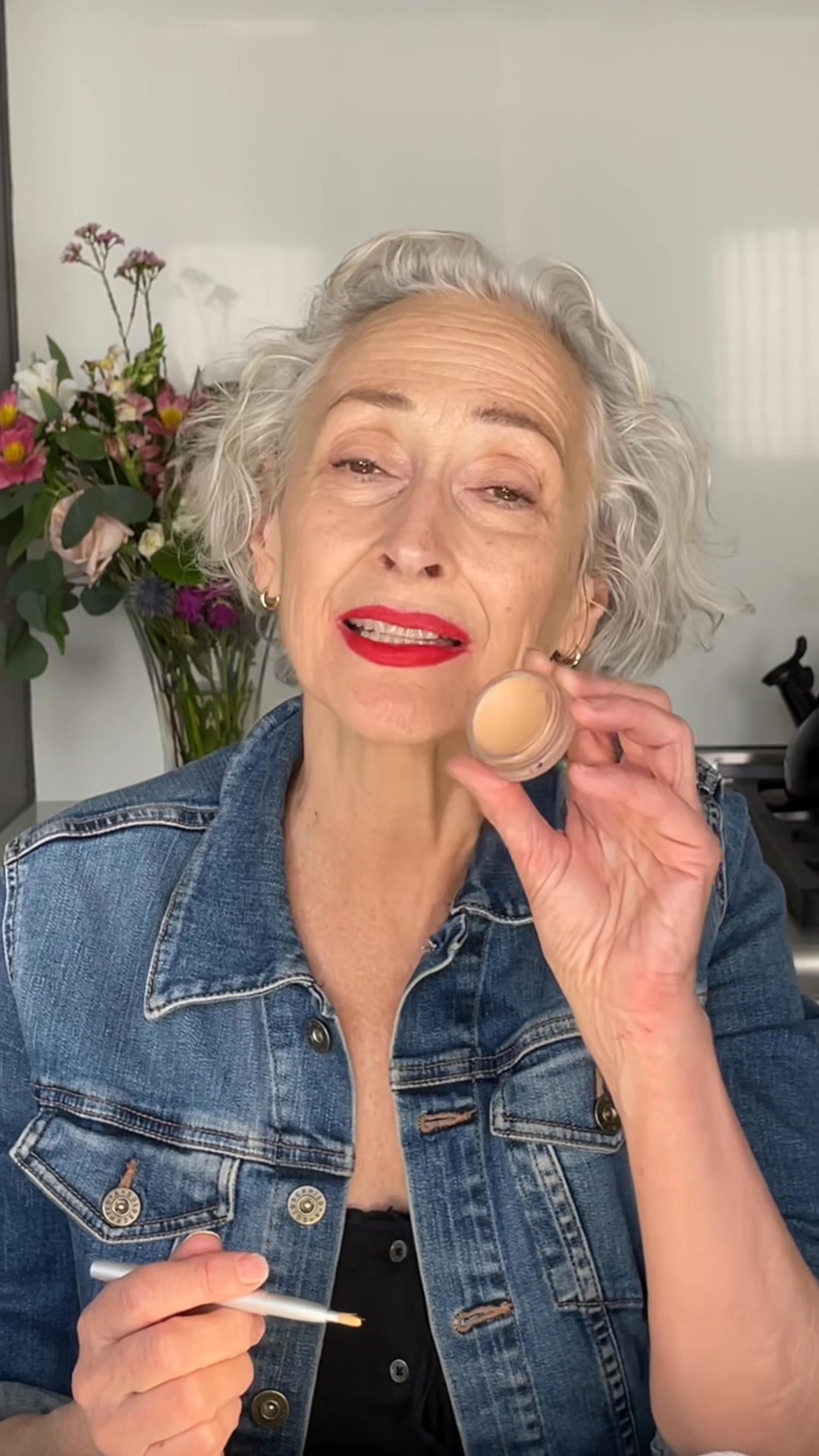
- The design move: A creator-application still — finger on cheekbone, balm visible — overlaid with a single sentence of testimonial copy and a tiny product render in the corner. No video, no voiceover, no production crew.
- Why it works without video: Beauty buyers respond to “this looks easy” more than they respond to feature lists. A still frame from a creator video, captioned as a quote, gives the brand all of the believability of UGC with none of the production cost.
- Cheap to copy with: One creator still (licensed or repurposed from existing UGC), one testimonial-style caption, one small product render. Re-shoot the still per shade or per season; the layout never changes.
- Live portfolio fingerprint: 30% of 40 active US ads use feature-breakdown × benefit-stack and another 15% use a now-available hook into benefit-stack — a portfolio built around constantly re-introducing the hero SKU rather than chasing new angles.
Want to filter the swipe file by format? The live curated swipe file tags every active ad with hook and angle — combine that with sector to find static-friendly categories like supplements, mattresses, eyewear, and beauty. 364 brands, updated daily, no signup.
What the 8 templates have in common
Pull all 8 apart and four things repeat.
1. The hook is in the headline, not the visual
Static ads can’t front-load with motion or pacing. The first second of a static ad is the headline, full stop. Every winning template above — Avocado’s sale anchor, HexClad’s “the secret,” Magic Spoon’s category attack — uses a headline that could carry the ad even if the image were generic.
2. There’s a price, a percent-off, or a number somewhere on the canvas
Six of the eight templates above carry a price, a discount, or a savings claim somewhere visible. Static ads convert on commitment, not curiosity — and a number is the cheapest commitment device on the canvas. Even the “story” ones (Bonobos, Jones Road) park an offer in the last frame or corner.
3. They’re built once, re-rendered per variant
None of these are bespoke designs. Look at MaryRuth or Magic Spoon’s portfolio and you’ll see the same layout re-used across dozens of bundles, colourways, and seasonal pushes. The template is the asset; the variant is just a swap. That’s how static portfolios scale to 50–100 active ads without burning out a designer.
4. The format matches the category, not the trend
Eyewear gets carousels because choice is the unlock. Supplements get price stacks because the offer is the unlock. Beauty gets creator stills because believability is the unlock. None of these brands picked their format because static was “in” — they picked it because it was the least-friction way to deliver what their buyer needed to see.
If you’re shipping static this month
The shortest version of this post:
- Pick one template from the eight above based on your category. Eyewear and apparel → carousel; supplements and personal care → price stack; beauty and skincare → creator still.
- Build the layout once. Every variant is the same template with a different SKU, colour, or offer.
- Ship 5–10 variants in week one. Static is meant to be tested at volume; that’s the entire reason to skip video.
- Don’t replace the template until you’ve burned through at least 20 variants. The auction rewards depth on a working layout.
That’s how the brands at the top of this list get to 50+ concurrent static ads on the same layout without it ever feeling stale — the variant is the refresh.
Related reading
- The 9 Best DTC Meta Ad Hooks of 2026 — the hook layer underneath each of the templates above.
- 10 Great DTC Meta Ads With Links — the same brands as this post, plus AG1 and Ruggable, in single-ad teardown form.
- 10 Facebook Ad Library Search Tips — how to find static templates worth copying in the first place.
Browse the hand-tagged DTC swipe file
364 DTC brands. Every active ad hand-tagged with hook + angle by our editorial team. Filter by sector, by hook, by angle — or flip on “Distinctive only” to drop the saturated 85% of feed-standard creative. Updated daily, no signup required.
Open the swipe fileOr get email alerts when these brands change creative
The DTC watchlist tracks the brands above and emails you when their Meta ads change. One page, no account needed.
See the watchlist