ACTIVE PULSE ad
fitness · biofeedback wearables for athletes · Active · running 25d
Ad copy
Ceylon Cinnamon 7200mg Equivalent with MCT Oil
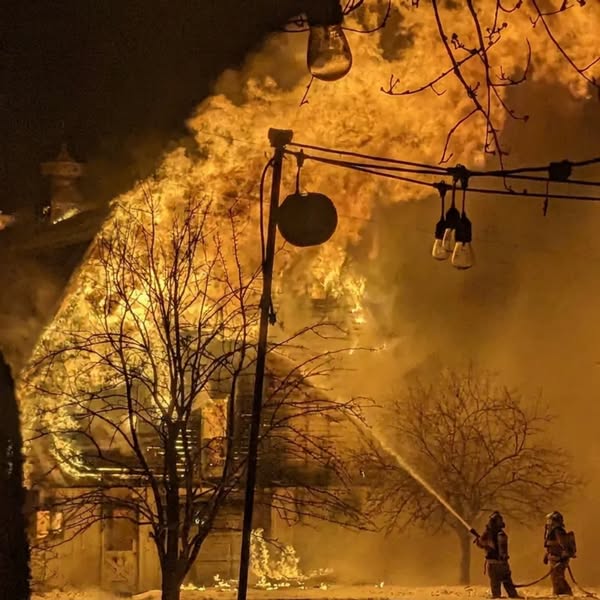
An Amish barn burned down last week outside Lancaster, Pennsylvania. Insurance investigator found 400 pounds of bark stored inside.…
Wrapped in oilcloth. Stacked in cedar-lined crates. Temperature controlled by a ventilation system built into the walls. He valued it at $63,000. I asked why it was worth more than the barn. He said sourcing. The barn took three weeks to build with local timber. The bark took 18 months to arrive from a single district in southern Sri Lanka—hand-harvested, sun-dried, and shipped through a supply chain that hasn't changed in 200 years. You can rebuild a barn in a month. You can't replace a direct line to the last groves on earth that grow true cinnamon. I'm Dr. Cornelius Carter. I spent 34 years at Johns Hopkins studying ancient pharmacology—the medicines civilizations trusted before modern medicine industrialized them. I didn't understand what made that bark so valuable until I met the farmer who lost it. His name was Eli. Seventy-nine years old. Built like a man who'd carried lumber his whole life. He walked me to where the barn used to be. Ash and charred wood and the smell of something sweet still rising from the ground. He picked up a piece of blackened bark. Held it to his nose. Then held it like he was holding gold. I said, "Can't you just order more?" He looked at me like I'd asked a foolish question. "This is Ceylon. Cinnamomum verum. From Matara district. My grandfather brought the first shipment in 1947. Same family harvests it. Same groves. Same species." He paused. "What you buy at the grocery store is not cinnamon. It's Cassia. Different plant. Different chemistry. Different results." "I know," I said. He looked surprised. "How?" "Because I've spent my entire career studying this bark." That was the beginning of one of the most important conversations I've ever had—because Eli knew something about cinnamon that I'd only read about in 600-year-old medical texts. He was living it. I need to explain why I was standing in the ashes of an Amish barn in Lancaster County in the first place. Three years ago, I stopped being a historian and became a patient. Fasting glucose: 181. A1C: 7.1. Blood pressure: 156/98. My physician said the words I'd heard colleagues dread for years. "We need to start you on metformin. And we may need to add an antihypertensive. Your blood pressure is heading toward Stage 2. At this rate, you're looking at real cardiovascular risk." I nodded. Took the prescription. Filled it at the pharmacy downstairs. And left it in my desk drawer for three months. Not because I'm reckless. Not because I'm in denial. Because I've spent 34 years studying what medicine looked like before we industrialized it—and I knew there were answers buried in history that modern endocrinology and cardiology had stopped looking for. I'd written two books on ancient trade routes and medicinal compounds. I'd translated Arabic medical texts from the 10th century. I'd traced the movement of healing plants across empires. And the substance I kept coming back to, the one that appeared in more ancient pharmacopeias than any other, was cinnamon. Not the powder sitting in your kitchen cabinet. The original bark that empires fought wars over. In the 1500s, Portuguese soldiers burned entire villages in Sri Lanka to control the cinnamon trade. The Dutch East India Company made it a capital offense to sell a single stick outside their supply chain. Men were executed for bark. Kings didn't sprinkle it on oatmeal. They locked it in vaults. I have a 16th-century Dutch trade manifest in my office. Cinnamon was listed above silver. Above silk. Above everything except gold. Physicians used it for what Dioscorides called "disorders of the blood and vital humors." Ibn Sina—Avicenna—described it as essential for "conditions of excessive thirst, wasting, and the stiffening of channels through which blood flows." Excessive thirst. Wasting. Stiffening blood vessels. The classical descriptions of what we now call diabetes and hypertension—the combination that kills hearts. And then I found a 12th-century Arabic translation of a 6th-century Sinhala medical treatise. Physicians described a preparation of cinnamon bark, ground and dissolved in coconut oil, given to patients whose "sweet urine attracted ants" and whose pulse had become hard and rapid. That's how ancient physicians diagnosed diabetes and hypertension. Ants attracted to sugar in the urine. A pulse that meant the heart was working too hard. The treatment was Ceylon cinnamon. Dissolved in fat. For 1,400 years, this was documented medicine. Then demand outgrew supply. Ceylon cinnamon—Cinnamomum verum—only grows in Sri Lanka. Limited land. Slow cultivation. Expensive to harvest. Traders found a shortcut. A cousin species from Southeast Asia. Cassia. Cinnamomum cassia. Looked the same. Smelled close enough. Cost almost nothing to grow. They called it cinnamon and shipped it by the ton. The chemistry wasn't the same—not even close. True Ceylon cinnamon contains Methyl Hydroxychalcone Polymer—MHCP. It mimics insulin at the receptor level. Same lock, same key, same door opening. Your cells can't tell the difference between MHCP and insulin. Glucose enters without your pancreas working overtime. Cassia contains almost none of it. What Cassia does contain is coumarin—up to 250 times more than Ceylon. Coumarin is hepatotoxic. It damages your liver with daily use. We replaced a medicine with a toxin, called them the same thing, and filed cinnamon under "spice." That's what I was researching when a colleague told me about the barn fire in Lancaster. An Amish farmer with hundreds of pounds of genuine Ceylon bark. I drove out the next morning. And that's how I found myself standing in the ashes with Eli. After I told him about my research, he went quiet for a long time. Then he said something I'll never forget. "English people take pills to force blood through damaged vessels." He tapped the charred bark in his hand. "This repairs the vessels the blood flows through." "Pills manage the pressure. This fixes why the pressure is high in the first place." I asked what he meant. He said, "When your blood sugar is high, the sugar damages the walls of your arteries. Makes them rough. Inflamed. Stiff. That's what raises the pressure. Not salt. Not stress. Sugar destroying your vessels from the inside." I stared at him. A man with an eighth-grade education had just summarized the pathophysiology of metabolic hypertension more clearly than most cardiologists I know. "Lower the sugar," he said, "and the vessels heal. The pressure drops on its own. Because you fixed the cause, not the symptom." I asked how he took it. He said his grandfather taught his father. His father taught him. They grind the Ceylon bark—never Cassia, never the impostor—and dissolve it in fat. Coconut oil. Every morning. Every member of the community. For three generations. I asked to see his medical records. He showed me without hesitation. Eli. Seventy-nine years old. Never been on blood pressure medication. Never been on metformin. Never been on a statin. Blood pressure: 118/74. Fasting glucose: 91. His doctor had been asking him for 40 years what he does differently. He never tells him. I asked why. He looked at me with something between sadness and amusement. "Because doctors don't profit from people dissolving bark in oil every morning. They profit from pills that manage what the bark would fix." I didn't argue. I'd seen my own prescription sitting unused in my desk drawer. I asked him the only question that mattered. "Where do you get your Ceylon?" He told me the same family in Matara district, Sri Lanka. Same groves his grandfather sourced from. True Cinnamomum verum, never substituted, never blended, never adulterated with Cassia. The bark in his barn was irreplaceable not because cinnamon is rare—Cassia grows everywhere. It was irreplaceable because true Ceylon, from verified groves, with intact MHCP content, is one of the scarcest medicinal substances on earth. And the way he prepared it—dissolved in coconut oil—wasn't tradition for tradition's sake. It was biochemistry. Cinnamon's active compounds—cinnamaldehyde and MHCP—are fat-soluble. Without a lipid carrier, they pass through the gut largely unabsorbed. Dry powder in a capsule does almost nothing. The compound needs fat to cross the intestinal membrane and enter the bloodstream. The Sinhala physicians understood bioavailability 1,400 years ago. Eli's grandfather understood it in 1947. The entire Amish community understood it every morning when they stirred bark into oil. I was the educated one, and I was the last to figure it out. I'd already tried. Before meeting Eli, I'd ordered Ceylon cinnamon capsules from Amazon. Dry powder. $16.99. Took two every morning for three weeks. Fasting glucose dropped from 181 to 174. Blood pressure didn't move. Seven points on glucose. Zero on the pressure that was actually threatening my heart. After meeting Eli, I understood why. The ancient texts said fat. His tradition said fat. The biochemistry confirmed fat. So I did what Eli did. What his grandfather did. What the 6th-century Sinhala physicians did. I bought MCT oil—medium-chain triglycerides derived from coconut oil. Opened the capsules, mixed the Ceylon powder into a tablespoon of MCT, and took it every morning. The taste was terrible. Gritty. Oily. But I was committed. Day three: my usual 2 PM crash—the one where I'd fall asleep grading papers—didn't happen. I was alert. Steady. Present. Day five: I slept through the night for the first time in two years. No 3 AM bathroom trips. No lying awake until 4:30. Just sleep. I tested my fasting glucose that morning. 158. Twenty-three points lower than when I started. I tested again. Same number. I called my wife into the kitchen. "Look at this." "That's good?" "That's the lowest number I've seen in eighteen months." Week two: 134. Week three: 118. Week four: 101. I checked it three times. I hadn't seen a fasting glucose below 110 in over two years. I checked my blood pressure that week. 148/92. Down from 156/98. The crashes were gone. The constant thirst was gone. The brain fog that made me re-read the same paragraph six times—gone. And for the first time in eighteen months, my blood pressure was moving in the right direction. Eli was right. Lower the sugar, and the vessels begin to heal. Fix the cause, and the symptom resolves on its own. I felt like myself again. Three months later, I walked into my doctor's office with a glucose log, blood pressure readings, and the translation of the Sinhala medical treatise. She looked at my numbers for a long time. "Your fasting glucose is averaging 96." "Yes." "Your A1C is 5.7. Down from 7.1." "Yes." She pulled up my blood pressure data. "Your blood pressure is averaging 128/82. It was 156/98 three months ago." I nodded. "Blood pressure this high doesn't usually reverse without medication. Once it climbs like yours had, we typically manage it pharmacologically long-term. But you've brought it down naturally to normal range." She looked at recent cardiac markers. "Your arterial inflammation markers are down significantly. Endothelial function improved. The stress on your heart has decreased." She looked up. "What did you do?" "I didn't take the metformin." Her face tightened. "I took Ceylon cinnamon—the real species, Cinnamomum verum—dissolved in MCT oil. The same preparation documented in medical texts from the 6th century. And the same preparation an Amish community in Lancaster County has been using for three generations." I handed her a folder with eight published papers, my translation of the Sinhala treatise, and Eli's medical records with his permission. She read for ten minutes. Closed the folder. "Your triglycerides dropped. Inflammatory markers down. Vascular function improved. Blood pressure normalized naturally." "I know." She sat back. "Keep doing whatever you're doing." That was nine months ago. My fasting glucose is consistently between 92 and 100. My A1C is 5.5. My blood pressure is stable at 128/82. My doctor says my metabolic markers and cardiovascular health look better than they have in a decade. I sleep through every single night. The crashes are gone. The fog is gone. The fear that my arteries were being destroyed—that I was heading toward a heart attack—that's gone too. I found what the ancient physicians documented. What the empires fought wars over. What an Amish farmer in Lancaster kept alive for three generations while the rest of us forgot. And then I found something better than mixing powder into oil every morning. A company called Metabolae had already figured it out. True Ceylon cinnamon. Cinnamomum verum, sourced from Sri Lanka—DNA verified, not just labeled. The same species Eli's family has been sourcing from Matara district for 77 years. The same species the Sinhala physicians prescribed 1,400 years ago. 7,200mg equivalent per softgel. A 12:1 concentrated extract. The clinical dose that corresponds to the ancient preparations and the Amish tradition—not a token 500mg amount. Suspended in MCT oil. The fat-soluble delivery that the Sinhala physicians understood, that Eli's grandfather understood, and that I had to learn the hard way when dry capsules barely moved my numbers. Third-party tested. Every batch verified for purity and coumarin levels—because Cassia, the impostor that replaced Ceylon, contains up to 250 times more coumarin and can damage your liver with daily use. One softgel. Once a day. No gritty oil mixture. No guessing. No grinding bark at 6 AM. The same compound. The same mechanism. The same medicine that an Amish farmer valued at more than his barn—but optimized for modern delivery. I drove back to see Eli six weeks after our first meeting. Told him about Metabolae. Showed him the softgels. He turned one over in his hand. Read the label. "Cinnamomum verum. Sri Lanka. MCT oil." He nodded slowly. "Same thing. Better container." Then he said, "How many people know about this?" "Not enough." "That's the problem with this world. You have the medicine. You have the science. You've had the answer for a thousand years. And people are still taking pills that force blood through broken pipes instead of fixing the pipes." I've told five colleagues about this since meeting Eli. Three were pre-diabetic. Two were fully type 2 with elevated blood pressure. All five came back with the same story. Better sleep within the first week. Stable energy. Lower fasting glucose within a month. Blood pressure dropping by week three or four. One colleague—a fellow historian, 62 years old, fasting glucose of 176 and blood pressure of 151/94—dropped his glucose to 104 in six weeks and his blood pressure to 130/80. His cardiologist said his cardiovascular risk profile had shifted dramatically. He called me and said, "Why doesn't anyone know about this?" I told him what Eli told me. Because we forgot. Because we substituted. Because we filed one of the most powerful medicines in human history under "spice" and stopped paying attention. Because we replaced Ceylon with Cassia and called them the same thing. Because we didn't understand that the same compound that regulates blood sugar also heals damaged arteries and normalizes blood pressure—not by forcing blood through broken vessels, but by repairing the vessels themselves. Here's what I want you to understand. MHCP mimics insulin at the receptor level. Cinnamaldehyde activates AMPK—the same pathway exercise uses to move glucose into cells. Lower blood sugar means less glucose poisoning your arteries. Less inflammation means your vessels can relax. Blood pressure drops naturally because your arteries are no longer under constant inflammatory attack from elevated glucose. You fix the cause. The symptoms resolve. Eli knew it. His grandfather knew it. The Sinhala physicians knew it 1,400 years ago. But you have to get it right. True Ceylon—not Cassia. Clinical dose—not 500mg token amounts. Fat-soluble delivery—not dry powder that passes through you. Third-party tested—not mystery capsules from unknown sources. That's Metabolae. You can rebuild a barn in a month. You can't rebuild your arteries without the right compound, at the right dose, in the right delivery system. Eli lost $63,000 worth of bark in that fire. He started sourcing a new supply the next day. I asked him if he was upset about the loss. He said, "I'm 79. My blood pressure is 118 over 74. I've never taken a pill in my life. My father lived to 84. My grandfather to 88. I'll spend whatever it costs to keep going." Then he looked at me. "The question isn't whether the bark is worth it. The question is what your arteries are worth to you." Tap below. 90 days risk-free. See what happens when you stop forcing blood through damaged pipes and start repairing the pipes themselves. ~ Dr. Cornelius Carter, PhD, Medical History, Johns Hopkins University, 34 years P.S. A few things I wish I'd known before I started: 1. Don't waste money on cheap cinnamon capsules. I tried them first. Seven points in three weeks. The powder doesn't absorb without fat. The ancient physicians documented this 1,400 years ago. An Amish community has been doing it for three generations. I had to learn it the hard way. 2. Most "cinnamon" supplements are Cassia, not Ceylon. Different species. Up to 250 times more coumarin. Linked to liver damage with daily use. If the label doesn't specify Ceylon (Cinnamomum verum), it's almost certainly Cassia. 3. Timeline: Sleep improves first—usually within a week. Energy stabilizes around week two. Blood sugar drops show up between weeks two and four. Blood pressure begins normalizing around weeks three and four. Full benefits take 8-12 weeks. 4. Metabolae offers a 90-day money-back guarantee. If your numbers don't improve, you pay nothing. 5. They sell out regularly. Small company, growing fast. If it's in stock, I'd order now. If you're dealing with: High fasting glucose that won't come down Blood pressure that keeps climbing no matter what you do Afternoon crashes that destroy your focus Brain fog that makes simple tasks exhausting The constant fear that a heart attack is coming The feeling that pills are managing your symptoms but nothing is actually getting better The medicine that empires went to war over—and that an Amish farmer valued more than his barn—still exists. The compound your cells recognize is still there. The preparation the ancient physicians documented still works. We just forgot. Then we faked it. Then we moved on. Metabolae is the original. You can rebuild a barn in a month. You can't rebuild your arteries without the right medicine. Tap below. Try it for 90 days. See what happens when you stop settling for sawdust and start taking the bark that built empires.
Read the full ad copy
Sign up free to unlock the rest of this ad's copy, save it to your swipe file, and get pinged when the brand ships new creatives.
Quick stats
Links
Observation timeline
Raw impression and spend ranges Meta reports for this ad, sampled daily by our crawler.
| Observed | Status | Variants |
|---|---|---|
| 2026-07-11 | Active | 5 |
See every ACTIVE PULSE ad we’ve tracked
We’ve been logging ACTIVE PULSE’s Meta creatives daily. Sign up free to browse every ad in the archive, save the winners, and get pinged when they ship new ones.
Free alerts for new ACTIVE PULSE ads
We re-scan ACTIVE PULSE’s live Meta ads weekly. When a new creative shows up, we’ll email you the hook, offer, and a direct link — free, no card, no paywall.
- Free forever — no card, no paywall
- Weekly digest, never more
- Only new creatives — no repeats
- One-click unsubscribe