Electric Tea Co ad
tea · premium loose-leaf tea · Active · running 43d
Ad copy
Natural Relief in Weeks
My husband took his blood pressure medication every single morning for twelve years. Three different pills. Cut salt out of everything.…
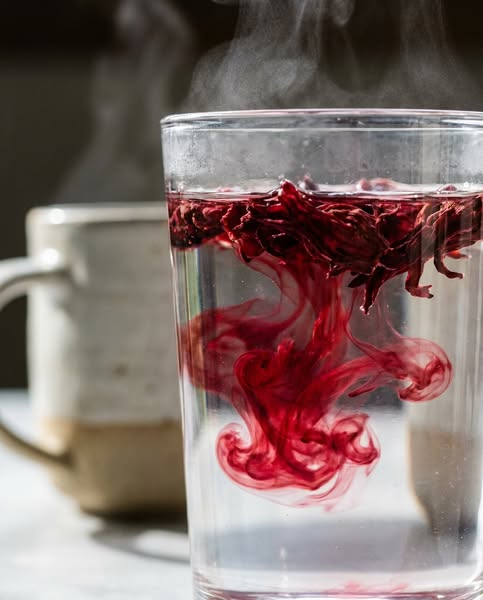
Lost thirty pounds in two years. Walked three miles a day, rain or shine. He did everything right. He had a massive stroke on March 8th at 6:12 AM. He was 64 years old. Took his blood pressure medication every morning. Three pills. Cut salt out of everything. Lost thirty pounds. Walked three miles a day, rain or shine. The hospital bill was $89,000. The funeral was $9,400. His coffee mug is still on the kitchen counter. I can't move it. If I move it, he's really gone. I need to tell you what happened to Frank. Because I'm seeing the same posts on Facebook that I was making two months before he died — "my husband's blood pressure won't come down no matter what we try, any advice?" — and it makes me physically ill. If you're over 55, or someone you love is, please read this entire thing. I know it's long. I know you're scrolling. I know you have things to do. Two months ago I would have given anything — everything — for someone to tell me what I'm about to tell you. Frank was diagnosed with high blood pressure at 52. His doctor put him on lisinopril that same day. "Take this every morning," he said. "We'll keep an eye on it." I didn't think twice about it. Frank's father had high blood pressure. His brother had it. It ran in the family. We both figured it was just something you managed, like mowing the lawn or paying the electric bill. You take the pill, the number stays down, life goes on. By the time he was 58, one pill wasn't enough. His blood pressure kept creeping up — 142/94, then 148/96, then 155/98 — even with the lisinopril. The doctor added amlodipine. Then, when that wasn't enough, metoprolol. Three pills. Every single morning. Lined up on the kitchen counter next to his coffee mug. But the pills came with problems of their own. The lisinopril gave him a cough that wouldn't quit. Not a little cough — a dry, hacking cough that kept us both up at night. It sounded like he was choking on nothing. I asked the doctor about it. "Common side effect. It should settle down." It never did. The amlodipine made his feet swell. By the end of each day, his ankles looked like they belonged to someone else. He stopped wearing his dress shoes. Then his walking shoes got tight. I watched him try to force his feet into his sneakers one morning and I had to leave the room because I didn't want him to see my face. The metoprolol made him tired. Not regular tired — a heavy, dull kind of tired where he'd sit in his recliner after dinner and just stare at the TV without really watching it. Like someone had dimmed the lights behind his eyes. I used to joke that I married a man and they gave me back a ghost. I stopped joking about it pretty fast. But his numbers were down. 128/82 at his last checkup. The doctor said he was doing great. "Well-managed," he said. Well-managed. 37 years of marriage. I knew every version of that man. The stubborn version. The proud version. The version that sat in his recliner every night looking ten years older than he was because three pills were hollowing him out from the inside. But his numbers were "fine." So nobody worried. The headaches started about six months before the stroke. Throbbing, mostly in the mornings. He blamed stress. His ankles were swollen even on days he didn't walk. He blamed his shoes. He was dizzy when he stood up. "Just stood up too fast." I asked him to tell his doctor. "I see him every three months, Linda. My numbers are fine. Stop worrying." I knew every version of that man. The stubborn version. The scared version pretending to be the stubborn version. By the end, I couldn't tell which was which anymore. The morning of March 8th started like every other morning. Frank woke up at 5:45. Took his three pills with a glass of water. Put on his walking shoes. Made coffee while I read the paper at the kitchen table. We'd been doing this for thirty-seven years. Same kitchen. Same coffee pot. Same routine. Same man standing at the counter with his reading glasses pushed up on his forehead, stirring his coffee with the same spoon he's used since our first apartment. He poured his second cup. Looked up at me over the rim. "What should we have for dinner tonight?" I said, "I don't know, what about that chicken thing you like?" He opened his mouth to answer. And then the right side of his face went slack. It happened that fast. Between one sentence and the next. Between "dinner tonight" and nothing. His coffee cup slipped out of his right hand. Shattered on the tile floor. He grabbed the counter with his left hand but his right arm was hanging. Just hanging. Like it wasn't connected to him anymore. "Linda." That was the last word my husband said clearly. My name. But it came out wrong — thick, slurred, like his mouth was full of something that wasn't there. "Frank? FRANK!" He slid down the counter onto the kitchen floor. Onto the broken pieces of his coffee cup. Into the puddle of coffee that was spreading across the tile. I watched my husband collapse in the same spot where he'd stood making coffee every morning for thirty-seven years. I called 911 at 6:12 AM. The paramedics were there in seven minutes. Two of them. A young woman — couldn't have been older than 25 — and a man about Frank's age. They strapped a cuff on his arm. Blood pressure: 224/142. Normal is around 120/80. The older paramedic looked at the young woman. She looked back at him. Neither of them said anything, but I saw it. I saw the look. "Ma'am, we need to transport him now." They lifted Frank onto a stretcher. He couldn't help them. His right side wasn't working. He just lay there with his mouth slightly open and his eyes looking at me — but not seeing me. Looking through me. As they wheeled him through the living room — past his recliner, past his bookshelf, past 37 years of our life — I tried to hold his hand. His right hand was limp. It didn't squeeze back. I followed the ambulance. Ran every red light. Didn't care. At the ER, they wouldn't let me back. "We're running scans, someone will update you." I sat in that waiting room for three hours and forty-one minutes. I counted every single minute. The chairs were hard plastic. The TV was playing some afternoon news show with the sound too low to hear. A man across from me was on his phone saying "I don't know, they won't tell me anything" over and over. A woman next to me was staring at the wall. And I sat there. In the fluorescent light. Smelling that hospital smell — that mixture of bleach and recycled air and fear — and I prayed. I don't pray often. But I prayed. When the doctor came out — a woman about 45, dark hair, scrubs, tired eyes — I knew before she opened her mouth. I knew from the way she was walking. "Mrs. Morrison, your husband has suffered a hemorrhagic stroke. A blood vessel in his brain ruptured. There is significant bleeding. We're moving him to neurosurgery." "But he was on three blood pressure medications," I said. "His last reading was 128 over 82. His doctor said he was well-managed." She looked at me. And then she said something that will be burned into my brain until the day I die: "Mrs. Morrison, blood pressure medication manages the reading on the monitor. But the damage to the blood vessel walls — the stiffening, the inflammation, the weakening that's been building for years — medication doesn't address any of that. Your husband's blood vessels had been deteriorating silently for over a decade. The medication was keeping the number down, but the vessels behind that number were failing. When one gave way, the blood flooded his brain." "So the pills didn't protect him?" "They slowed things down. But they didn't prevent this. And the strain of twelve years of chronic arterial pressure — even with the medication — had done damage that the medication was never designed to repair." They're doing everything they can. That's what they say when they don't know if they can save him. Frank spent five days in the ICU. I was there every morning at 7 when they opened the doors. I stayed until they made me leave at 9 PM. Every single day. I learned things about the neurosurgical ICU that I never wanted to know. I learned that the machines don't just beep — they have different beeps. A steady beep means things are okay. A fast beep means something changed. A long, sustained beep means you need to leave the room because people are about to rush in. I learned that sound. I heard it twice. Day 1, they took him straight into surgery. Four hours. They drilled a hole in my husband's skull to drain the blood and relieve the pressure on his brain. I sat in a waiting room the size of a closet with a vending machine that didn't work and a clock on the wall that I stared at until I memorized the scratch on its face. Day 2, the swelling got worse despite the surgery. They put him on a ventilator. A tube down his throat. His face was swollen. His eyes were closed. Machines were breathing for him because his brain couldn't tell his lungs to do it anymore. I held his hand. It was warm. That was the only thing that still felt like Frank. Day 3. He opened his eyes. Looked right at me. His left hand squeezed mine — weak, but deliberate. Present. For a moment — God, for one moment — he was Frank. He couldn't talk because of the tube. But his eyes. His eyes were there. He was in there. I leaned in and whispered, "I'm here, baby. I'm right here." His eyes filled up. One tear ran down the left side of his face. The right side didn't move. That was the last time my husband saw me. Day 4, the swelling increased. A second bleed. They rushed him back to surgery. I heard the long beep at 2 AM and running in the hallway and I stood up because I knew. Day 5. March 13th. At 4:17 AM, a doctor I'd never seen before walked in. I knew. "I'm so sorry. We did everything we could." I drove home at 6 AM. Frank's truck was in the driveway. The porch light was on because I'd left it on five days ago when the ambulance took him, and nobody had turned it off. I walked inside. His reading glasses were on the kitchen table. His walking shoes were by the door. The remote was on the arm of his recliner, right where he always left it. And his coffee mug. On the counter. Still there. From the morning of March 8th, when he was pouring his second cup and asking me about dinner. Next to it: his pill organizer. The little plastic box with the days of the week. Wednesday, Thursday, Friday, Saturday, Sunday — still full. He never made it past Tuesday. I sat in his recliner. I didn't move for six hours. The house was so quiet I could hear the refrigerator hum. 37 years. And now the only sound in my house was the refrigerator. The funeral was March 18th. Frank's brother flew in from Phoenix. Our daughter drove down from Milwaukee. The grandkids wore suits that were too big for them. My six-year-old grandson asked me: "Grammy, when is Papa coming home?" I told him Papa was in heaven now. He said: "Can we FaceTime him there?" I had to walk out of the room. After the funeral, I tried to go back to normal. I don't know what "normal" is anymore, but I tried. I couldn't. Because every time I opened my phone, I saw people — people my age, people Frank's age — posting about blood pressure. "My husband's numbers keep climbing." "Doctor wants to add a third medication." "Anyone else dealing with this?" And I knew — I KNEW — some of them were going to end up where Frank ended up. And some of them were going to end up where I am now. I couldn't just sit in this chair and watch it happen. So I started researching. Not because I wanted to. Because I had to. Because if Frank died for nothing — if I can't save even one person from what happened to him — then I can't live with that. I spent weeks reading. American Heart Association data. Medical journals I barely understood. Studies on stroke and hypertension. I read that nearly half of all American adults — 120 million people — have high blood pressure. That heart disease kills over 700,000 Americans every year. That stroke alone kills 160,000. Frank was 64. Right in the middle of the highest-risk group. I read that in 2017, the medical guidelines changed. They lowered the definition of "high blood pressure" from 140/90 to 130/80. Overnight. 31 million Americans who were "normal" on a Monday were "hypertensive" by Tuesday. Six of the fifteen people on that guideline panel had financial ties to pharmaceutical companies. I read that again. Six of fifteen. Frank had been taking blood pressure medication for twelve years. And the pills reduced his stroke risk by maybe 25 to 40 percent. That's what the research actually showed. Not 80 percent. Not 90. Twenty-five to forty. Frank was on the wrong side of those odds. And I kept reading one thing over and over, in study after study, article after article: It's not the blood pressure that kills you. It's the damage to your blood vessels that's been accumulating silently for years. Every person with high blood pressure — every single one — their blood vessels are under strain. Every heartbeat pushes blood against vessel walls that are supposed to flex and expand. When the walls are healthy, they absorb the pressure. When the walls are stiff and inflamed, the pressure tears them apart. That's what a stroke is. A blood vessel that couldn't take it anymore. And blood pressure medication? It forces the number down. It makes the heart pump softer, or pushes fluid out through the kidneys, or relaxes the vessels temporarily. But it does not repair the vessel walls. It does not reverse the stiffening. It does not reduce the chronic inflammation that's been weakening those walls for years. Frank's blood vessels were turning to stone. His medication was painting the stone to look like rubber. And nobody told us. So I started asking a different question. Not "how do you lower blood pressure?" "How do you actually protect the blood vessels?" The first thing I did was look at what Frank had already tried — what we'd both tried. The medications. Twelve years of lisinopril, amlodipine, metoprolol. Numbers went down. Side effects went up. Cough. Swelling. Fatigue. And the stroke happened anyway because the pills were treating the dashboard, not the engine. Then the supplements his doctor approved alongside the medication. CoQ10. I spent $35 a month on CoQ10 capsules for three years because someone told Frank it was "good for the heart." He took it every day. He died with CoQ10 in his bloodstream. CoQ10 supports cellular energy the way a nightlight supports a power grid — it's doing something, but it's not the thing that matters. Fish oil. Frank took two capsules every morning. Two years. His doctor said omega-3s were good for cardiovascular health. They are — mildly. They thin the blood slightly and may reduce triglycerides. They do nothing for the stiffening and inflammation in your blood vessel walls that actually causes a stroke. Garlic supplements. The "natural blood pressure remedy." I looked it up. A few small studies showed garlic lowered blood pressure by maybe 5 to 8 points. Five to eight points. Frank's blood vessel walls had been deteriorating for twelve years and I'm supposed to be grateful for eight points? Magnesium. Already in his multivitamin. Already in the diet I'd been carefully managing for a decade. He was getting plenty of magnesium and it didn't prevent a blood vessel in his brain from rupturing at 6:12 on a Tuesday morning. After twelve years and thousands of dollars in medications and supplements, Frank's blood vessels were in worse shape than the day he was diagnosed. Nothing was actually repairing the vessel walls. Nothing was reversing the stiffening and inflammation that turned a blood pressure problem into a death sentence. And I was furious. Because how is there an entire SYSTEM — medications, supplements, doctor visits every three months — and not a single part of it actually fixes the thing that kills you? They all just manage a number on a screen while the real damage continues. It's like repainting a house that's rotting from the inside. That's when I found something different. I was reading a thread on Facebook — one of those blood pressure support groups for people over 50 — and a woman posted something that stopped me cold. She said her husband had been on two blood pressure medications for eight years. Numbers never stable. Doctor kept adjusting doses. She was terrified he'd end up in the hospital. Then she found this article about hibiscus tea — organic hibiscus — and the research on what it does to blood vessels. Her husband started drinking it every morning alongside his walks. Four months later: his doctor took him off one of his medications. His blood pressure was lower than it had been in five years. Not just the number — the doctor said his overall cardiovascular markers had improved. Someone asked what kind of hibiscus tea. She said: "Not the grocery store kind. That's flower dust. The organic, whole-flower kind grown at high altitude. There's a huge difference." I almost scrolled past it. Hibiscus? Tea? For blood pressure? That sounded like something you'd read on a wellness blog next to a recipe for beet smoothies. Because I know hibiscus tea. I've had it. At Mexican restaurants. From boxes at the grocery store. Those little sachets that make a pinkish, slightly tart water that tastes vaguely like cranberry juice. It's fine. It's tea. It's not medicine. In what world does TEA stop a hemorrhagic stroke? But I couldn't stop thinking about it. Because that woman's husband had been on two medications for eight years and his numbers were never stable. Frank was on three medications for twelve years and a blood vessel in his brain exploded. What was different? So I kept reading. And what I found made me so angry I had to put my phone down and walk outside. There's a compound in hibiscus flowers called anthocyanins. That's the scientific name. I had to look it up three times before I could spell it. But what it does is something I understood immediately. Your blood vessels are lined on the inside with a thin layer of cells. Doctors call it the endothelium. I couldn't pronounce it the first time I read it. But this lining is what keeps your blood vessels flexible. Elastic. When your heart pumps, your vessels need to expand and contract with each beat — like a balloon breathing. The endothelium is what makes that possible. As you get older, that lining breaks down. The cells stop regenerating. And when the endothelium deteriorates, your blood vessels stiffen. They stop flexing with each heartbeat. They become rigid. Brittle. Like old garden hoses left in the sun. That's when blood pressure goes up. Not because something is wrong with your heart. Because the pipes are turning to stone. And here's the part that made me walk outside and sit on the porch until my hands stopped shaking: Blood pressure medication doesn't fix the endothelium. It doesn't repair the vessel lining. It doesn't make your arteries flexible again. It just forces the number down by making your heart beat softer or pushing fluid out through your kidneys or temporarily relaxing the vessels. The number on the screen goes down. The damage to your vessel walls continues. Frank was on three medications for twelve years. His numbers looked fine at every checkup. 128/82. "Well-managed." But his blood vessels had been stiffening for over a decade. Getting more rigid. More brittle. More inflamed. And one morning, a vessel in his brain — a vessel that had been getting more fragile every single day while his medication lowered the number on the screen — gave way. His blood vessels were turning to stone. The medication was painting the stone to look like rubber. And nobody told us. I put my phone down when I read that. I walked around the block three times. I was shaking. Not from cold. From anger. From grief. From the realization that my husband's blood vessels had been deteriorating for twelve years while three medications and quarterly checkups gave us both the illusion that everything was fine. Anthocyanins do something blood pressure medication has never done. They get inside the vessel walls and repair the endothelial lining. They reduce the inflammation that causes the stiffening. They help the cells regenerate. They make your blood vessels flexible again — not by forcing the number down, but by fixing the thing that made it go up. Hibiscus flowers are one of the richest natural sources of anthocyanins on earth. Researchers have been studying them for decades. Clinical trials — actual controlled studies — have shown that hibiscus tea significantly reduces blood pressure in adults. But the mechanism isn't just "lower the number." The anthocyanins are repairing the vessel walls from the inside. That's why the number comes down. Because the vessels are actually getting healthier. Not because a drug is forcing them open. I was furious. I'm still furious. But I wasn't going to just buy hibiscus tea off Amazon and hope for the best. I'm 62, not naive. So I kept researching. And I found out that most hibiscus tea sold in the US is worthless. Not useless the way CoQ10 was useless. Worthless because what's in the bag isn't even real hibiscus flowers. It's "flower dust" — the broken scraps and stems left over from processing. Swept off factory floors. Packed into tea bags with a pretty label. The anthocyanin content varies wildly. Some brands have almost none. It's like buying orange juice and getting flavored water. The hibiscus tea that shows up in the research — the kind that actually repairs blood vessel walls in clinical studies — has to be: - Whole flower (not dust or broken pieces) - Grown above 4,500 feet (higher altitude = more concentrated anthocyanins) - Hand-picked at peak harvest (preserves the compounds) - Traditionally processed (protects the anthocyanins from degradation) - Organic (pesticides block absorption) I kept seeing the same brand mentioned over and over in the reviews and testimonials. PiPi Tea. I ordered it. It was more expensive than the others I'd tried. But at that point I didn't care. When it arrived, I could tell the difference immediately. The flowers were whole, deep red, and perfectly dried. The smell was different — richer, almost sweet. When I steeped it, the color was a deep, vivid crimson — nothing like the pale pinkish water I'd gotten from the grocery store brands. But before I drank it, I did something first. I called Frank's cardiologist. The doctor who was there. In the hospital. Who told me the medication hadn't prevented this. I told him what I'd found. I asked him straight: "Is this real? Is this safe? Or am I grasping at straws because I can't accept that Frank is gone?" He was quiet for a long time. Then he said: "Linda, the data on anthocyanins and vascular health is some of the most promising cardiovascular research in the last decade. The endothelial repair mechanism is documented. The clinical trials on hibiscus are real — there are studies showing significant blood pressure reduction and improvement in arterial flexibility. Organic, whole-flower hibiscus is one of the richest natural sources of these compounds. There are no contraindications for daily use. No drug interactions at normal consumption." Then he paused. "If Frank's blood vessels had been in a different state — if the arterial walls had been flexible and healthy instead of stiff and inflamed — there is a real possibility that the stroke never would have happened." I had to hang up the phone. I sat on the edge of the bed — Frank's side — and I cried harder than I cried at the funeral. Because a doctor — THE doctor — just told me that my husband might still be alive if his blood vessels had been healthy. If anyone had told us. If we'd just known. I should tell you something. Three weeks after Frank died, I went in for my own checkup. I hadn't been to the doctor in eight months. I'd been too busy taking care of Frank to take care of myself. Blood pressure: 168/102. The doctor pulled out her prescription pad. "I'm going to start you on lisinopril —" "No." She looked up. "No. I watched lisinopril destroy my husband's quality of life for twelve years and it didn't prevent a stroke at 64. I'm not taking it." She paused. "Mrs. Morrison, 168 over 102 is dangerous. We need to bring this down." "I know. But not with that." I started drinking PiPi Tea that evening. I made my first cup the way the instructions said. Steeped the whole flowers in hot water for five minutes. The color was deep crimson — not the pale pink of grocery store hibiscus. A clean, tart warmth. Slightly sweet at the end. Nothing like the watered-down hibiscus I'd had at restaurants. Nothing like the bland sachets from the health food store. I've been drinking it every morning — one cup, first thing — for eight weeks now. One cup. Hot water. Steep for five minutes. Less time than making coffee in the French press Frank used to use. After the first week, I checked my blood pressure. 155/94. Down from 168/102. Better, but I'd tried cheap hibiscus before and gotten similar numbers. I wasn't ready to believe yet. After two weeks: 142/88. I checked it twice. By the end of the first month: 122/76. I checked it three times because I didn't believe it. It hadn't been under 130 in over three years. Those morning headaches that had started waking me up? Gone. The dizziness when I stood up too fast? Cleared up completely. I used to feel this constant low-level pressure behind my eyes — like something was always slightly wrong. I didn't even realize it was there until it wasn't. It's been two months now. My blood pressure this morning was 118/74. I sleep through the night. The headaches are gone. The dizziness is gone. I feel like myself again — not the tired, anxious version of myself that was slowly becoming the only version. I saw my doctor last week. She checked my blood pressure twice and then looked at me. "Whatever you're doing, keep doing it. These numbers are excellent." I didn't tell her about PiPi Tea. I'm not ready for that conversation yet. But I will be. Look, for twelve years I watched my husband take three pills every morning and believed that meant he was protected. I believed the doctor when he said "well-managed." I believed the number on the screen. I was wrong. The pills managed a number. The blood vessels behind that number were crumbling. And here's the thing — not all hibiscus tea is created equal. I wasted two weeks on cheap brands that barely moved the needle. PiPi Tea's organic, high-altitude, whole-flower hibiscus is the only one that actually worked. If that woman in the Facebook group hadn't posted about hibiscus tea that day, I'd still be sitting in this chair with 168/102 and a prescription I refused to fill. I've told everyone I know. My sister — she's 66, on lisinopril and a statin, can't take most supplements because they interact with her prescriptions — she asked her pharmacist about hibiscus tea and he said it's fine, no interactions with her medications. She's been drinking PiPi Tea every morning for four weeks now. She called me last Tuesday and said: "Linda, my numbers haven't been this good since my forties. 124/78. I almost fell off the chair." My neighbor Barbara — she lost her husband to a heart attack three months before I lost Frank. Two widows on the same street in the same year. She started drinking it the day I told her. She grabbed my hand last week and said: "It's the first time since November that I'm not terrified every time my husband's — " and then she stopped. Because she almost said "my husband's." And he's gone. And we both just stood there. My daughter and son-in-law. Both drinking it. Both have family histories of high blood pressure. Both had readings that were starting to creep up. My daughter texted me last week: "Mom. 116/72. I haven't seen that number since college." Frank's brother in Phoenix — 68, diabetic, on blood pressure medication for nine years — he ordered it the day of the funeral. He emailed me last week: "Linda, my doctor wants to reduce my medication. My numbers have improved that much. I think Frank would want me to tell you this is real." I had to close my laptop when I read that. I'm not a doctor. I'm not a scientist. I'm not selling anything. I'm a 62-year-old widow sitting in my dead husband's recliner at 3 in the morning because I can't sleep and I can't stop thinking about whether anyone will read this in time. Here's what I know because I lived it: Blood pressure medication manages a number. Frank was on three pills. His last reading was 128/82. His doctor said "well-managed." A blood vessel in his brain ruptured anyway. Nearly half of all American adults have high blood pressure. Heart disease kills 700,000 of us every year. Stroke kills 160,000 more. The pills reduce stroke risk by 25 to 40 percent. That's what the actual research shows. Not 90 percent. Not 80. Twenty-five to forty. By the time a stroke happens, the damage to your blood vessels has been accumulating for years. No drug can undo that in an emergency room. Your blood vessels' ability to handle the pressure is the difference between a checkup and an ICU bed. And there's a compound — studied in clinical trials, consumed daily for centuries in cultures with a fraction of our stroke rate — that actually repairs the vessel walls from the inside. I wish someone had told me this before March 8th. Before the kitchen. Before the coffee cup shattering. Before "what should we have for dinner." Before 4:17 AM. I can't go back. Frank can't come back. His coffee mug is on the counter and it's going to stay there. But you can still go forward. The article that explains what I just told you — the research, the science, what organic whole-flower hibiscus does to your blood vessels and why it's not the same as the hibiscus tea you've been drinking — it's the reason I found PiPi Tea. It's the reason my blood pressure went from 168/102 to 118/74 without a single prescription. I want you to read it. Not for me. For whoever you'd leave behind. 👇 https://shop.pipitea.com/hbt/sp Frank used to say: "You can't fix what you don't know is broken." Your blood vessels are breaking. And the medication isn't fixing them. — Linda Morrison, age 62 Plainfield, IL P.S. His coffee mug is still on the counter. 31 days now. I still can't move it. Every morning I walk into the kitchen and see it and for one second I forget. For one second I think he's about to walk in from his morning walk and pick it up and say "morning, Lin." He's not. $89,000 in hospital bills. $9,400 for the funeral. Three pills every morning for twelve years. And a daily cup of tea that costs less than a dollar — a tea his own doctor said could have changed everything. Please. Don't end up here. Don't let someone you love end up here. 👇 https://shop.pipitea.com/hbt/sp P.P.S. I keep thinking about the morning of March 8th. The chicken thing he liked. The coffee on the floor. If you're reading this and someone you love is on three medications and the doctor keeps saying they're "well-managed" — please. Just look into it. That's all I'm asking.
Read the full ad copy
Sign up free to unlock the rest of this ad's copy, save it to your swipe file, and get pinged when the brand ships new creatives.
Quick stats
Links
Observation timeline
Raw impression and spend ranges Meta reports for this ad, sampled daily by our crawler.
| Observed | Status | Variants |
|---|---|---|
| 2026-07-12 | Active | 1 |
See every Electric Tea Co ad we’ve tracked
We’ve been logging Electric Tea Co’s Meta creatives daily. Sign up free to browse every ad in the archive, save the winners, and get pinged when they ship new ones.
Free alerts for new Electric Tea Co ads
We re-scan Electric Tea Co’s live Meta ads weekly. When a new creative shows up, we’ll email you the hook, offer, and a direct link — free, no card, no paywall.
- Free forever — no card, no paywall
- Weekly digest, never more
- Only new creatives — no repeats
- One-click unsubscribe